
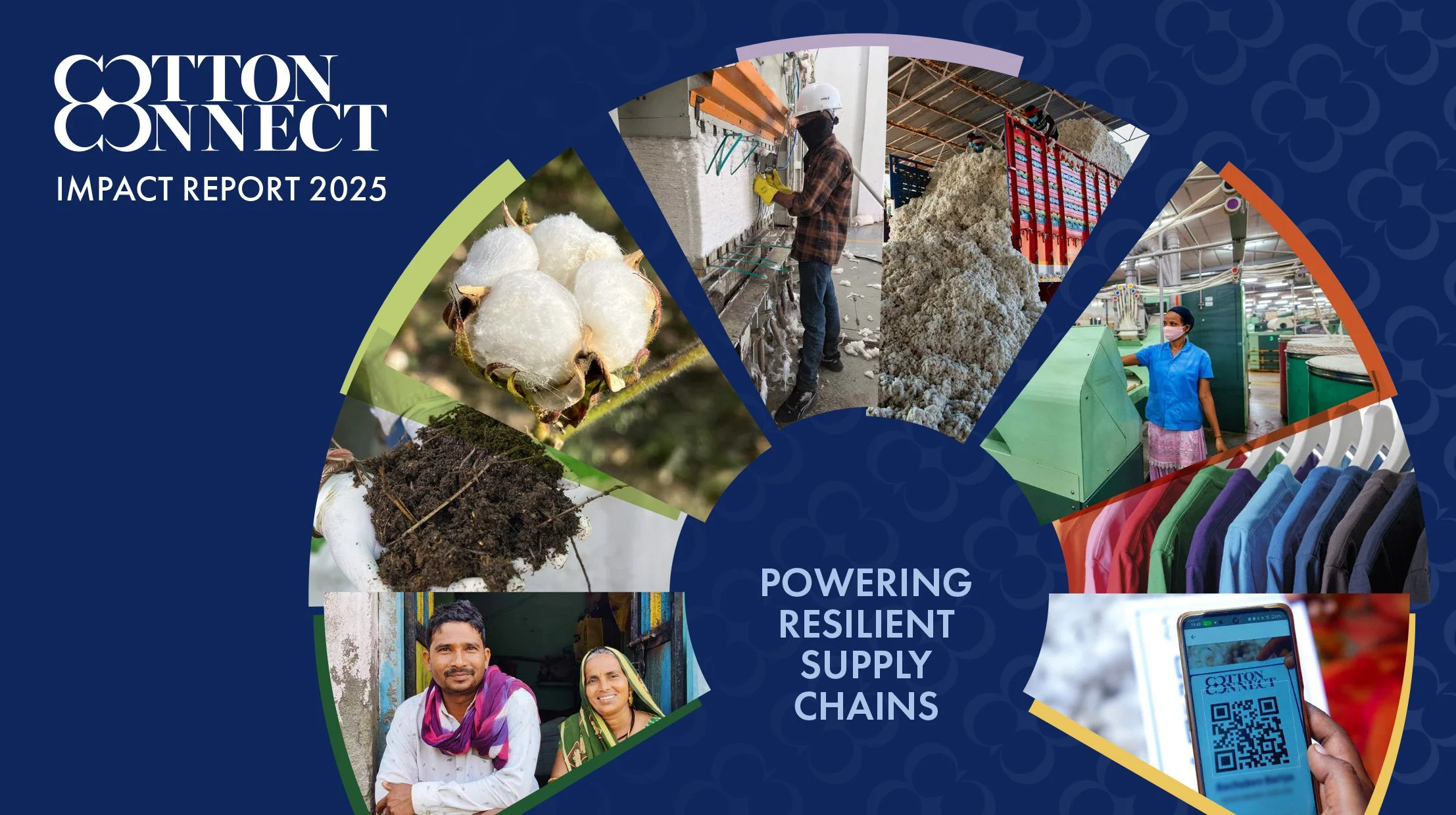
Our Impact Report 2025 outlines our 2024/25 results and how we are delivering certified traceable, responsibly sourced cotton for global brands and manufacturers.
Highlights Include
- We achieved our traceability goal of 100% of REEL Cotton traceable through our digital platform TraceBale. In 2024-25, 152,174 MT lint cotton from REEL programmes was traced through TraceBale.
- In 2024-25, we trained over 448,000 farmers in sustainable agricultural practices in India, Pakistan, Bangladesh, China, Egypt, and Türkiye, increasing farmers’ yield and income whilst reducing environmental impacts.
- The REEL Programme continued to support farmers in reducing the use of chemical fertilisers (11.8%), chemical pesticides (15.2%), water (1.3%), and input costs (15.4%), whilst increasing the use of natural fertilisers (107.6%), natural pesticides (127.3%), yields (7.5%), and profit (34.9%), compared with control farmers.
- Through the REEL Regenerative programme, over 260,000 farmers were trained on regenerative practices, many of which are ancestral practices, contributing to improving the soil health and resilience of their farm, whilst also achieving a 34.9% increase in profit.
- We expanded our Responsible Business for Gins programme beyond HSSE training to include key aspects of human rights due diligence, including human rights compliance, worker welfare, worker residential facilities, and worker protection.
- Farmers in the second year of our Organic Cotton Farmer Training Programme in Pakistan earned 35.3% higher profits than conventional farmers, achieved by a 47.2% reduction in input costs due to the elimination of chemical fertilisers and pesticides, and a 7% premium on the sale of organic cotton.
Our report title introduces our new tagline ‘Powering Resilient Supply Chains’. More than a tagline; it reflects our belief that sustainable cotton must work for farmers, for ecosystems, and for the global brands that rely on them. This is underpinned by three pillars of Innovating Products, Nurturing People, and Regenerating Planet, with the supporting activities for each pillar detailed in the report. By powering resilient supply chains, we can support the people and nature at the heart of producing raw materials.
Our Impact Report 2025 outlines our 2024/25 results and how we are delivering certified traceable, responsibly sourced cotton for global brands and manufacturers.
Highlights Include
- We achieved our traceability goal of 100% of REEL Cotton traceable through our digital platform TraceBale. In 2024-25, 152,174 MT lint cotton from REEL programmes was traced through TraceBale.
- In 2024-25, we trained over 448,000 farmers in sustainable agricultural practices in India, Pakistan, Bangladesh, China, Egypt, and Türkiye, increasing farmers’ yield and income whilst reducing environmental impacts.
- The REEL Programme continued to support farmers in reducing the use of chemical fertilisers (11.8%), chemical pesticides (15.2%), water (1.3%), and input costs (15.4%), whilst increasing the use of natural fertilisers (107.6%), natural pesticides (127.3%), yields (7.5%), and profit (34.9%), compared with control farmers.
- Through the REEL Regenerative programme, over 260,000 farmers were trained on regenerative practices, many of which are ancestral practices, contributing to improving the soil health and resilience of their farm, whilst also achieving a 34.9% increase in profit.
- We expanded our Responsible Business for Gins programme beyond HSSE training to include key aspects of human rights due diligence, including human rights compliance, worker welfare, worker residential facilities, and worker protection.
- Farmers in the second year of our Organic Cotton Farmer Training Programme in Pakistan earned 35.3% higher profits than conventional farmers, achieved by a 47.2% reduction in input costs due to the elimination of chemical fertilisers and pesticides, and a 7% premium on the sale of organic cotton.
Our report title introduces our new tagline ‘Powering Resilient Supply Chains’. More than a tagline; it reflects our belief that sustainable cotton must work for farmers, for ecosystems, and for the global brands that rely on them. This is underpinned by three pillars of Innovating Products, Nurturing People, and Regenerating Planet, with the supporting activities for each pillar detailed in the report. By powering resilient supply chains, we can support the people and nature at the heart of producing raw materials.